Designed around scan, AI design, print, and cure for permanent restorations.
Shining 3D Dental
$5,999.00
Shining 3D Ceramix-Nano 3D Printer
Capsule 3D printing workflow for same-day chairside restorations.
Product details
Capsule resin workflow with shade selection for additional boxes.
Also supports bridge workflows up to 3 units with validated material planning.
We can review printer, curing kit, shade planning, training, and launch needs.
Build package
Items are added as real Shopify SKUs, so order history and margin stay clean.

Ceramix-Nano 3D PrinterIncluded: printer, one A2 LumiCera CB200 box of 3 capsules, and 50 AI Crown Design credits.
$5,999.00
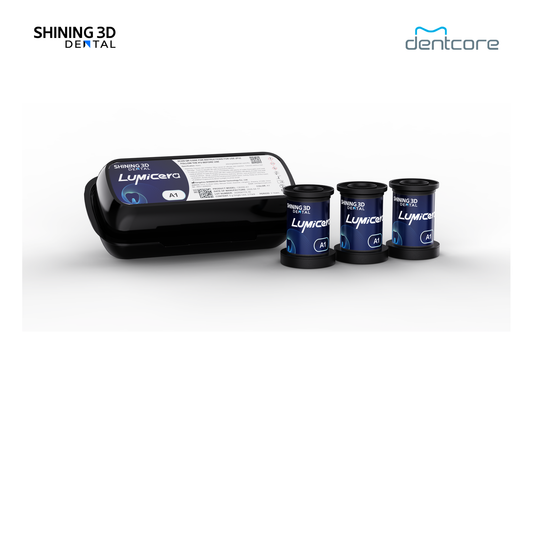
Add LumiCera CB200 boxes
Select a shade and add extra LumiCera CB200 capsule boxes. Each box contains 3 capsules. The printer package already includes one A2 starter box.

Set to 0 if no extra LumiCera boxes are needed.
Ready to order
$5,999.00
Ceramix-Nano printer / no extra add-ons
Questions? Talk to Dentcore.
Product description and downloads
Shining 3D Ceramix-Nano is a compact capsule 3D printer with integrated curing for chairside permanent-restoration workflows. The system is designed to connect intraoral scanning, cloud-based design, capsule loading, printing, curing, and final delivery without requiring a conventional open-vat resin workflow.
See Ceramix-Nano 3D Printer in action
The hardware weighs approximately 2 kg and measures 87 x 131 x 276 mm. Its small footprint is paired with Shining 3D's APS (Adaptive Pneumatic Stereolithography) process, which manages the high-viscosity, ceramic-filled capsule material used for this workflow.
Chairside workflow
Shining 3D positions Ceramix-Nano as part of a scan-to-restoration system rather than as a stand-alone printer. A typical workflow moves through four stages:
- Scan: capture the prepared tooth with a compatible intraoral scanner.
- Design: review and refine a crown proposal through SHINING FLOW and the available cloud design tools.
- Print and cure: scan the capsule, load it into Ceramix-Nano, print the restoration, and use the integrated curing drawer.
- Finish and deliver: complete the material-specific finishing and clinical delivery steps.
According to Shining 3D's published product information, typical single-crown printing is 8–11 minutes and on-machine curing is 3 minutes. Actual total chairside time depends on scanning, design review, finishing, material, indication, and the individual case.
Applications and material planning
The published application range includes crowns, veneers, inlays, onlays, and bridges up to three units. Ceramix-Nano uses the LumiCera capsule workflow, with pre-measured material and capsule identification supporting printer setup. Shining 3D lists five VITA shades for LumiCera: BL, A1, A2, B1, and C2.
Because this is a complete restorative workflow, buyers should confirm indication, shade demand, design access, finishing protocol, training, and recurring material requirements before ordering. Dentcore can help map those requirements to the correct launch configuration.
Key specifications
| Technology | APS (Adaptive Pneumatic Stereolithography), DLP optical engine |
|---|---|
| Wavelength | 405 nm |
| XY resolution | 50 microns |
| Typical print cycle | 8–11 minutes for a single crown |
| Integrated curing | 3-minute published on-machine curing cycle |
| Dimensions and weight | 87 x 131 x 276 mm; approximately 2 kg |
Explore the Ceramix-Nano system
- See the Dentcore Ceramix-Nano workflow guide.
- Browse Ceramix-Nano system products and materials.
- Compare Shining 3D dental printers at Dentcore.
- Contact Dentcore for configuration and availability.
Download the official Ceramix-Nano brochure
Product indications, specifications, material availability, software services, and workflow requirements may change. Confirm the current manufacturer documentation and case requirements before clinical use.
You may also like
-
Shining 3D Ceramix-Nano Aesthetic Curing Kit
Regular price $700.00 USDRegular priceUnit price per -
Shining 3D Ceramix-Nano LumiCera CB200 Capsule Resin
Regular price $67.00 USDRegular priceUnit price per -
Shining 3D Ceramix-Nano AI Crown Design Service Credit - 1000 Units
Regular price $1,000.00 USDRegular priceUnit price per -
Shining 3D Ceramix-Nano AI Crown Design Service Credit - 50 Units
Regular price $50.00 USDRegular priceUnit price per -
Shining 3D Ceramix-Nano AI Crown Design Service Credit - 500 Units
Regular price $500.00 USDRegular priceUnit price per -
Shining 3D Ceramix-Nano Optional Two-year Extended Warranty
Regular price $1,500.00 USDRegular priceUnit price per -
Shining 3D Ceramix-Nano Self-guided Training
Regular price $300.00 USDRegular priceUnit price per -
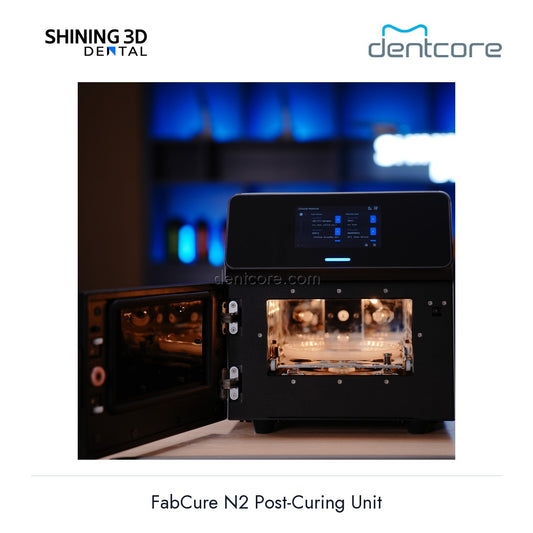
Shining 3D FabCure N2 Post-Curing Unit
Regular price $3,499.00 USDRegular priceUnit price per