
Graphy shape memory aligners (SMA), explained: what they are and why labs are watching in 2026
Clear aligners have been made the same way for two decades. You print a row of models, you heat a plastic sheet over each one, you trim and ship. The plastic does the work, the printer just builds the molds. Graphy's shape memory aligner resin throws that step out. You print the aligner itself, in one piece, directly from the design.
That sounds like a small change. It is not. It changes what the aligner can do once it is in the mouth, and it changes the math on what a lab needs to run an aligner program. Here is a plain read on what shape memory aligners are, how the Tera Harz workflow fits, who actually benefits, and what to confirm before you commit a case to it.
What a shape memory aligner actually is
A thermoformed aligner is a frozen shape. The sheet takes the form of the model, cools, and holds it. To move a tooth, you sequence a stack of slightly different trays, and each one pushes until the plastic relaxes and stops pushing. Force is high on day one and fades fast.
Graphy Tera Harz TA-28 is a printed resin that behaves differently. It is a shape memory material: print it to the target shape, deform it to seat over the current tooth position, and it works to return to the printed shape as it warms to body temperature. Instead of a hard initial shove that decays, you get a steadier pull toward the goal. Graphy describes it as the first directly 3D-printable clear aligner material, meaning the tray comes off the printer as a finished aligner rather than as a mold for one.

Why the force behavior matters
The knock on thermoformed plastic has always been the force curve. It spikes, then drops, so a tray can go slack days before you swap it. Labs and clinicians paper over that with shorter wear intervals and more trays per case.
A material that recovers toward its printed shape holds its intent longer. Published lab work backs the basic claim: an in vitro study comparing 3D-printed shape memory material against thermoformed PET-G found the printed material recovered its shape as temperature rose toward body heat, while PET-G showed little recovery. More consistent force over the wear period is the practical payoff. It is not magic, and it does not redesign your treatment plan for you, but a steadier push is a real advantage for the kind of controlled movement aligners are weakest at.
How the Tera Harz workflow fits a lab
Direct printing collapses the back half of aligner production. The thermoform side, the sheets, the forming machine, the trimming, goes away. What replaces it is a print and post-process loop you may already own most of.
Scan or import the case, set up the staged tooth movements in your aligner software, and nest the trays on the build platform. You print on a validated DLP or LCD machine. Graphy has also announced an integration with Medit's intraoral scanners and digital platform, aimed at a scan-to-appliance path that stays digital end to end. If you run Medit chairside or in the lab, that is one less file conversion to babysit.

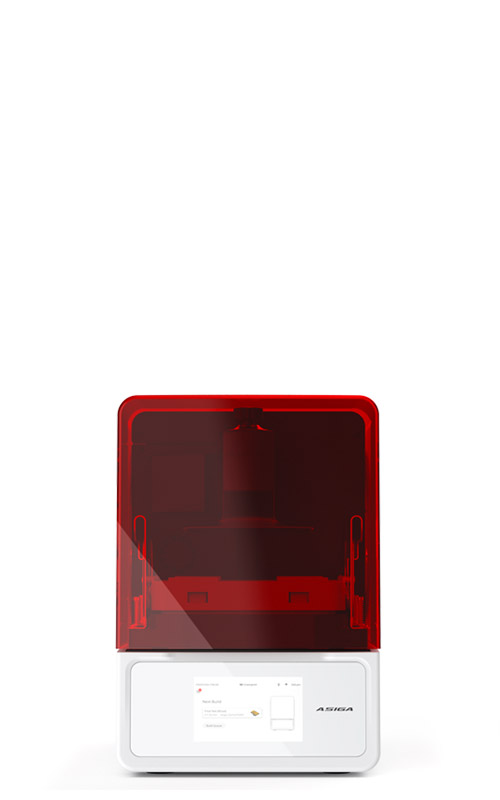
Post-processing is where TA-28 asks for discipline. Tera Harz resins are tuned around Graphy's own curing approach, including an inert, low-oxygen cure that drives the surface conversion these materials need to hit their mechanical and biocompatibility numbers. You can run Graphy's Tera Harz Cure unit for that, and many labs do. The point to absorb before you buy: the resin and the cure are a system. Skipping the validated wash and cure is the fastest way to get an aligner that looks right and performs wrong.
Who this is genuinely for
Shape memory aligners reward a practice or lab that is already digital and already doing volume. If you scan, design, and print in house, direct aligners remove a whole production station and tighten your turnaround. The force characteristics suit clinicians who want more predictable control on rotations and tougher movements than thermoformed trays comfortably deliver.
It is a weaker fit if you outsource design, print only occasionally, or have no appetite for validating a new resin and cure protocol. In that case the established thermoform path, or a third-party aligner lab, is the lower-friction choice, and that is a perfectly reasonable place to stay. Tooling matters too: TA-28 belongs on a printer and cure unit it has been validated for, so the honest answer to can I run this on what I own is sometimes no, or not yet.
Be honest about the learning curve as well. The first handful of cases on any new resin go slower while you dial in orientation, supports, and cure timing, and aligners are thin parts that punish a sloppy build. Labs that treat the first month as calibration, rather than expecting full speed on day one, come out the other side with a process they trust. The resin is also clear and rigid by design, which reads well in the mouth, but like any printed aligner it benefits from clean finishing on the gingival margins so it seats comfortably.
What to confirm before you start
This is a young category, and a few checks save real money.
- Regulatory status for your region. The aligner resin has FDA clearance in the US and CE certification in the EU. Confirm the current clearance covers your intended use before you treat a patient.
- Printer and cure validation. Verify the specific printer, wash, and cure combination is validated for TA-28. Mechanical and biocompatibility claims assume the validated process, not a generic one.
- Wear protocol. Recovery is temperature driven, so patient compliance and wear time feed directly into results. Set expectations the same way you would for any aligner case.
- Throughput math. Count the trays you print per case and your real cure cycle time. Direct printing wins on labor and on cutting the thermoform station, not automatically on raw speed for a single tray.
None of this is a reason to wait. It is the short list that separates labs that adopt this cleanly from labs that fight it for a month.
Looking at shape memory aligners?
We stock Graphy Tera Harz TA-28 and the Tera Harz curing line, and we can talk through whether your current printer and cure setup is a fit before you order.
View Graphy TA-28Browse Graphy