
Shining 3D Aoralscan Elite Guide
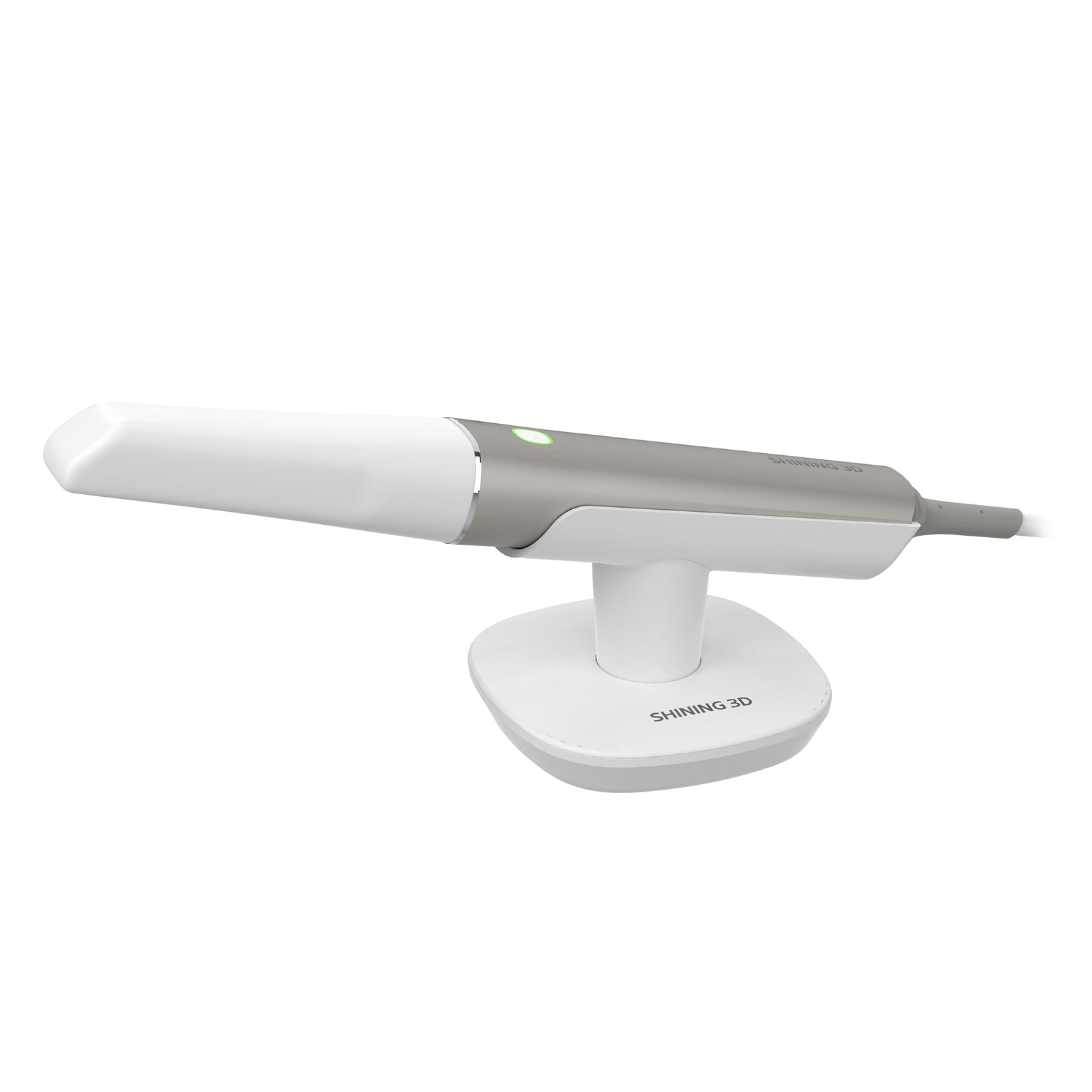
Full-arch implant work is where ordinary intraoral scanning starts to struggle. Stitching a long edentulous span together introduces cumulative error, and on an All-on-X case that error becomes a bridge that does not seat passively. The Shining 3D Aoralscan Elite is built to address exactly that problem, and intraoral photogrammetry is the feature that sets it apart from the standard Aoralscan line.
This is Shining 3D's premium chairside scanner, here in the wired version with IPG. Here is what photogrammetry adds, why it matters for full-arch implants, and how to read a spec sheet that the manufacturer keeps deliberately short.
Specifications at a glance
| Specification | Shining 3D |
|---|---|
| Scanner type | Premium wired intraoral scanner with IPG |
| IPG | Intraoral photogrammetry for full-arch implant verification |
| IPG tip | 19 × 14 mm |
| Standard tip | 16 × 12 mm |
| Mini tip | 12 × 9 mm |
| Tips | Autoclavable |
| Connection | USB (wired) |
| Export formats | STL, PLY, OBJ (open) |
| CAD compatibility | exocad, 3Shape, STL-based platforms |
| Warranty | 3 years (standard) |
The flagship intraoral scanner
The Aoralscan Elite is the top of Shining 3D's intraoral line, above the Aoralscan 3. Like that scanner it is a chairside wand that captures teeth directly, but it is positioned for the harder cases, and its defining feature is intraoral photogrammetry. The version covered here is wired with IPG and a 3-year standard warranty.
What intraoral photogrammetry actually solves
IPG is the reason to consider the Elite over a standard scanner. Conventional intraoral scanning builds a model by stitching many small images together. Across a few teeth that is accurate. Across a full edentulous arch with several implants and no teeth to anchor on, small stitching errors accumulate, and the result can be a full-arch framework that does not sit passively on every implant.
Photogrammetry takes a different measurement of the implant positions and uses it to verify the full-arch relationship with photogrammetric accuracy. In plain terms, it is the check that confirms the implants are where the scan says they are, on the case type where that confirmation matters most.
Built for All-on-X and passive fit
This capability points at one job in particular: All-on-X and other full-arch implant cases, where passive fit is non-negotiable. A bridge that loads the implants unevenly invites mechanical and biological failure, so verifying position before the prosthesis is fabricated is exactly the kind of safeguard the IPG workflow is built to provide.
For a practice doing routine crown-and-bridge or single implants, this is capability you would rarely call on. For a practice or lab regularly handling full-arch implant restorations, it is the core argument for the scanner.
Three tips, all autoclavable
The Elite ships with three tip options: a dedicated IPG tip at 19 × 14 mm, a standard 16 × 12 mm tip, and a mini 12 × 9 mm tip. The larger IPG tip is matched to the photogrammetry workflow, while the standard and mini tips cover everyday and posterior or pediatric scanning. All tips are autoclavable, which keeps reprocessing straightforward between patients.
Wired reliability and open files
This is the wired configuration. A USB connection means no battery to manage and no Wi-Fi to drop during a scan, which is a fair trade for clinicians who value a dependable, latency-free connection over cable-free movement. Files export in open STL, PLY, and OBJ formats compatible with exocad, 3Shape, and other CAD platforms, so the scan integrates with established design and lab pipelines rather than locking you in.
Reading a short spec sheet honestly
One thing worth naming: Shining 3D publishes less detail on the Elite than on the Aoralscan 3. Figures such as a specific accuracy number, scan speed, weight, and scan depth are not stated on the current product page, so this guide does not quote them. The Elite's case rests on its photogrammetry and full-arch verification, which are clearly documented, rather than on bench numbers that are not.
If accuracy, speed, or weight figures are decisive for your decision, ask Dentcore for the current manufacturer specification before ordering rather than inferring them.
Elite versus Aoralscan 3
The split between the two is clean. The Aoralscan 3 is the lighter, fully specified everyday workhorse with a 2-year warranty, sized for mainstream restorative and orthodontic work. The Elite is the premium tier, adding intraoral photogrammetry for full-arch implant verification and a 3-year warranty. The deciding question is simple: do you do enough full-arch implant work to need photogrammetry. If yes, the Elite. If not, the Aoralscan 3 likely covers your caseload for less.
See the Aoralscan Elite at Dentcore
Dentcore carries the Aoralscan Elite with intraoral photogrammetry and a standard 3-year warranty. Review the specs, confirm full-arch workflow fit, and request current pricing and availability.
View Aoralscan EliteBrowse all Shining 3D scanners and printers →