
MEDIT i900 vs Shining 3D Aoralscan Elite: Workflow Comparison
Two scanners, both right around twenty grand, both fully open, both launched to real applause. On a spec sheet the Medit i900 and the Shining 3D Aoralscan Elite look like the same purchase. Pick them up back to back and they feel like tools built for different dentists.
Short version: the i900 is the polished all-rounder with a famously refined software workflow. The Aoralscan Elite is the lightest wand on the market and the first to build real photogrammetry into the scanner itself, which quietly rewrites the math for full-arch implant work. Both are excellent - what you scan most days is what decides which one is the better fit for you.
The quick verdict
Side by side
| Spec | Medit i900 | Shining 3D Aoralscan Elite |
|---|---|---|
| Weight | 165 g | 124 g (lightest current-gen) |
| Launch price | ~$18,999 (scanner) / ~$20,999 with laptop | ~$20,000 |
| System | Open - STL, PLY, OBJ | Open - STL, PLY, OBJ |
| Headline technology | Market-leading software with strong AI soft-tissue cleanup | World-first intraoral photogrammetry (coded scan-body markers) |
| Full-arch implants | Capable all-rounder | Photogrammetry workflow; under 30 µm inter-arch in independent testing |
| Scanner tips | Largest tip in Medit's lineup | Three sizes, autoclavable ~100 cycles |
| Subscription | None for core scanning | None |
Where the i900 pulls ahead
Medit's software is the reason the i900 is so easy to recommend. Soft-tissue and artifact cleanup is handled well by the AI, margins come through crisp, and the whole capture-to-export flow is smooth enough that a new operator is productive fast. It is a genuine do-everything scanner, and at 165 g it is light without making a headline out of it.

Where the Aoralscan Elite is genuinely different
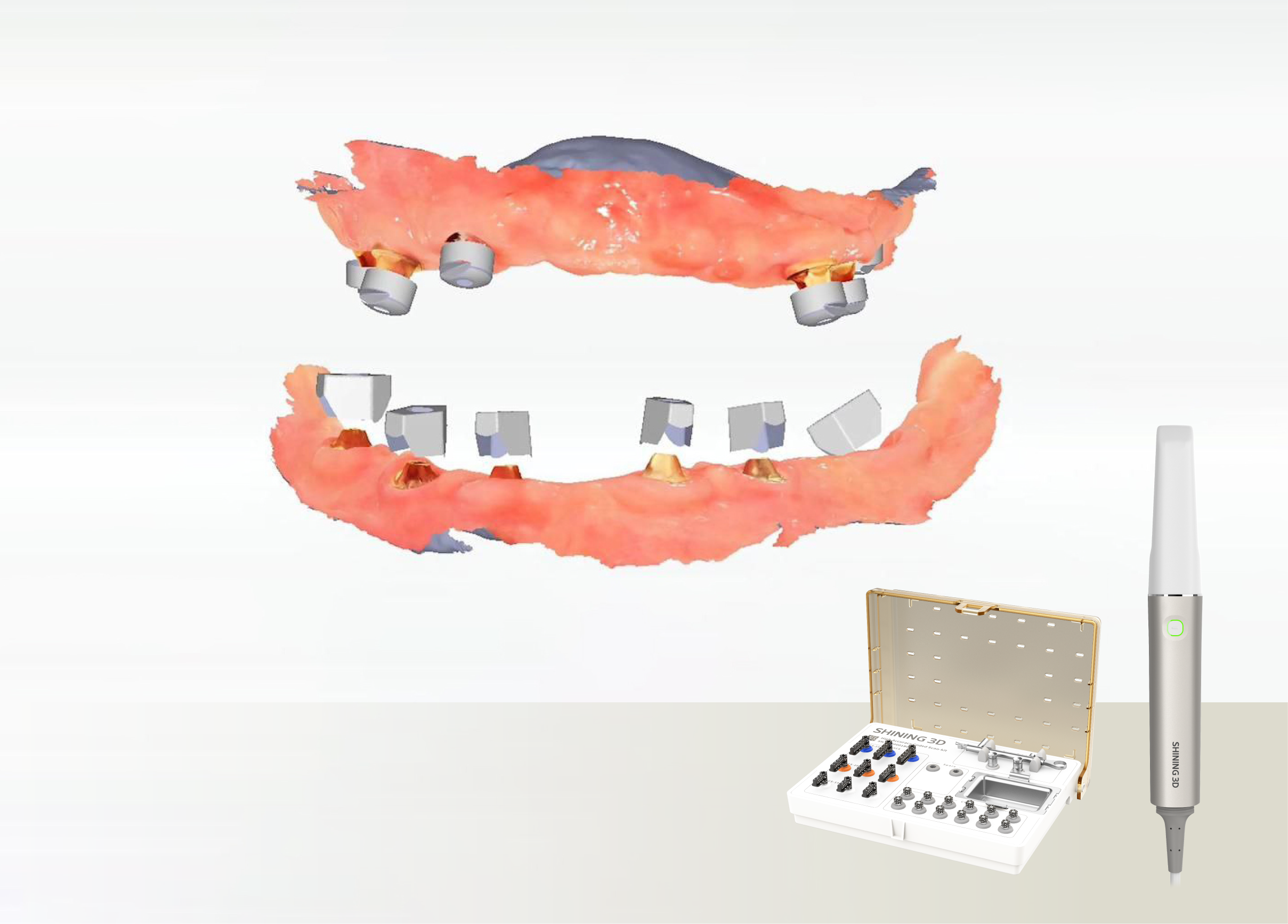
Two things set the Elite apart. It is the lightest scanner you can buy right now at 124 g, and it is the first to put a photogrammetry workflow inside the wand. For full-arch implant cases that second point matters: in independent hands-on testing across more than a dozen cases, inter-arch implant discrepancy came in under 30 microns, and a full arch scans in well under 30 seconds. The full software suite is included with no subscription.
.jpg)
The honest trade-offs
No scanner is perfect, and pretending otherwise helps nobody. The i900's trade-off is straightforward: at 165 g it's light but not the lightest, and if a big share of your work is full-arch implants, the Elite's photogrammetry will have the edge on those specific cases. For everything else - crown & bridge, quadrant, ortho - you would be hard pressed to find a gap.
The Elite's trade-off is the flip side of going first: it's newer technology, so the long-term track record is still being written, and it asks for a quick recalibration every couple of weeks. What you get for that is being early on a full-arch workflow that genuinely leads the category right now. Neither of these is a deal-breaker - they're just the honest cost of two different design bets, and knowing them going in is how you skip the buyer's remorse.
Both are open - you are not locked in
Neither one boxes you into a closed ecosystem. Both export clean STL, PLY, and OBJ, so they drop straight into exocad or whatever design path you already run, and your lab can open the files without a license game. That alone takes a lot of the risk out of either decision.
Not sure which one fits your chairs?
Dentcore stocks and supports both. Tell us your real case mix and we will point you to the right scanner - straight answer, no upsell.
See the Medit i900See the Aoralscan EliteBrowse all intraoral scanners →