
Is digital dentistry actually worth it? The honest 3-5 year math
Every digital-equipment pitch lands in the same place: it pays for itself. Maybe. It depends entirely on numbers most people don't run before they sign. So let's run them out loud, with the assumptions on the table where you can argue with them.
I'll give the conclusion first, because burying it would be dishonest. Digital dentistry pays off for the practice or lab with steady volume and the discipline to actually use the gear. For everyone else it's a beautiful machine that depreciates while you learn it. The technology works fine. The real variable is whether your case volume clears the math.
What going digital actually costs
Be honest about the whole bill, not just the sticker on the scanner. Two common entry points, with rough, publicly-quoted ranges so you can sanity-check a quote:
A chairside practice usually starts with an intraoral scanner. Street prices vary widely by brand and bundle, commonly somewhere in the rough range of $20,000 to $35,000, and many practices stop there and keep sending the design and milling to a lab. Add an in-office mill or printer later and you're into more capital plus materials.
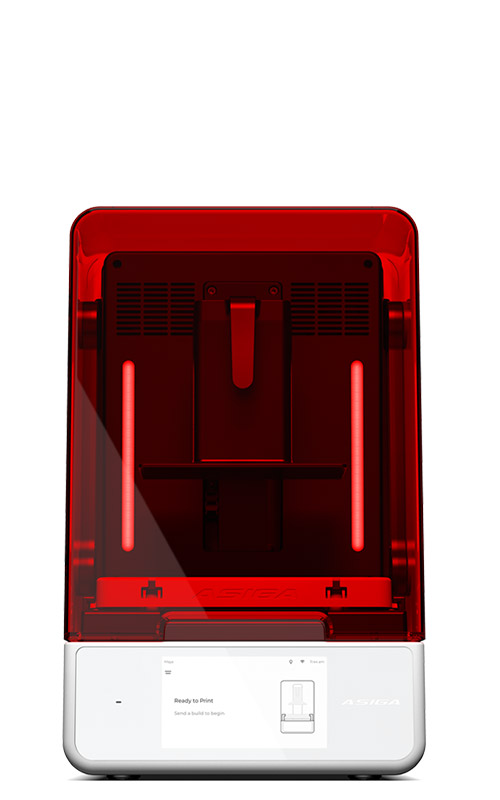
A lab production setup is design software such as exocad, a milling machine and/or a resin 3D printer, a curing and finishing station, and materials. Depending on how much you buy at once, real-world capital for software plus a printer or mill commonly lands in the rough range of $25,000 to $80,000.
The line items people underestimate are the ones that don't have a price tag on the invoice: the training ramp, where output is slower for weeks; consumables and materials that recur forever; service contracts; and the plain fact that a new workflow is slower before it's faster. None of that kills the case. It just has to be in the math.
Where the savings actually come from, and where they don't
For a chairside practice, savings are mostly lab-fee avoidance and chair time. If you currently pay a lab for each crown and you start milling in-house, you save the lab fee minus your own material and time per unit. Add fewer remakes from impression errors, plus same-day delivery, which is a real scheduling and patient-experience win even though it's hard to put a clean dollar figure on.
For a lab, savings are labor-hours per unit and remake reduction, plus the ability to take on more volume without hiring in lockstep. Digital design and milling or printing compress the minutes per unit. That only matters if you have the units to spread the fixed cost across.
Where the savings don't show up is low volume. A printer that sits idle four days a week doesn't save anything; it depreciates. A scanner used twice a week stays expensive per use because the denominator never grows. The equipment doesn't create demand. It makes the work you already have cheaper or faster, and if there isn't much work, there isn't much saving.

The break-even math, with the assumptions showing
The structure is simple: break-even units equal total cost divided by savings per unit. The numbers below are illustrative and clearly labeled. They are not your numbers. The point is the method, so plug in your own.
A practice example (illustrative assumptions)
- Assume scanner plus an entry mill plus software at roughly $40,000 all-in over three years.
- Assume a net saving of about $80 per crown done in-house versus sent out, that is, the lab fee you skip minus your material and chair time. Your real figure might be $40, or $150. It moves everything.
- Break-even is about 40,000 / 80 = 500 crowns. Over three years that's roughly 167 a year, or around 14 a month.
Read it this way: a practice doing 15 or more in-house crowns a month likely clears that inside the window. A practice doing three or four a month does not. The scanner alone may still be worth it for cleaner impressions and easier communication, but the mill won't pay itself back quickly at that volume.
A lab example (illustrative assumptions)
- Assume software plus a printer or mill plus finishing at roughly $50,000 all-in over three years.
- Assume a saving of about $25 per unit, from doing in-house what you used to outsource, or simply doing it faster.
- Break-even is about 50,000 / 25 = 2,000 units over three years, or roughly 55 a month.
A lab with steady production absorbs that without much drama; the per-unit saving is small but the volume is there to carry it. A part-time or just-starting lab won't hit 55 a month for a while, and the payback stretches past the window.
The big caveat, stated plainly: these figures are made up for illustration. Your lab fee, material cost, hourly cost, remake rate, and how aggressively you bought all swing break-even by hundreds of units. Run your own.
Why three to five years, not forever
Scanners and software move quickly. A scanner bought today stays competitive for a few years, then a meaningfully better one arrives and you'll want it. Mills and printers last longer mechanically, but the materials and software around them keep changing. So plan on a refresh cycle, not a one-time purchase. The honest version is to budget for an upgrade somewhere in year four or five, and don't model your savings as if the gear is free after payback, because there's always a next machine.
The counterpoint is also true, and worth holding onto: well-chosen gear holds its value. A milling machine still producing accurate units at year five has more than paid for itself, even if you replace the scanner twice in that span. Not everything depreciates at the same speed, and the durable pieces are usually the ones doing the production.
Who it pays off for
- A growing practice doing double-digit crowns a month that wants same-day delivery and fewer remakes.
- A lab with steady, predictable volume that can keep the machines busy.
- Anyone whose current outsourcing bill or remake rate genuinely hurts. The savings are biggest where today's cost is highest, so a painful lab bill is, oddly, the best argument for going digital.
- A team that will commit to the training. The gear only pays back when it's used well, and that's a people problem more than an equipment one.
Who should wait
- Low or irregular volume. If the machine sits idle most of the week, the math doesn't close. Start scanner-only and keep outsourcing production until your numbers justify bringing it in-house.
- Solo or part-time operations early in their ramp. Buy the piece that pays back first, usually the scanner, rather than the whole chain on day one.
- Anyone counting on the equipment to create demand. It improves the work you already have; it won't fill an empty schedule.
- A team without the bandwidth to learn it right now. A great workflow run badly is slower than the analog one it replaced, and morale takes the hit too.
How to de-risk the decision
A few moves that keep the downside small while you find out whether the volume is really there:
- Phase it. Scanner first, then add milling or printing when in-house volume justifies it. The scanner is the lowest-risk entry because it earns value even while you keep outsourcing production.
- Count your real units before you buy, then divide honestly. If you can't name your monthly crown count off the top of your head, you're not ready to model payback.
- Pick the lever that's biggest in your shop. Lab-fee avoidance pays back fast when your lab bill is high; labor compression pays back fast when your volume is high. Buy for whichever one you actually have.
- Don't over-buy on day one. Idle capacity is the most expensive thing in this whole equation.
The Dentcore takeaway
Digital pays off when volume is steady and the gear genuinely gets used. Before you buy, run break-even on your own crown count and your own lab fee, not a brochure's. Phase the purchase so the scanner earns first and the production hardware follows the volume. Budget for a refresh in years four to five rather than pretending the equipment is free after payback. And if the machine would sit idle, wait, because idle capacity is the one number in this whole exercise that never pays you back.
Want help running the numbers for your practice or lab?
We sell the digital lineup, exocad, Medit, Shining 3D, Asiga, VHF, Graphy and more, but the honest first step is your own break-even. Tell us your monthly unit count and we'll help you model it before you spend a dollar. Call 844-292-8023.
Browse digital equipmentQuestions? Contact usPlanning the workflow itself? Read: intraoral scanner to production →